
Oshkosh® S-Series™ Bridge Law High-Lift Tag Axle Configurations

The Oshkosh® S-Series™ Federal Bridge High-Lift tag axle configurations provide concrete producers operating in bridge-law states with a simplified approach to weight distribution, maneuverability and axle management.

Designed around customer feedback, the new configurations combine a high-lift rear tag axle with optimized auxiliary axle placement to deliver the payload capability producers need in Federal Bridge applications.

The result is an evolution of the Oshkosh S-Series front discharge mixer that simplifies the operator and service experience while delivering the uptime, productivity and jobsite performance concrete producers expect.

How Does the Oshkosh S-Series High-Lift Tag Axle Support Federal Bridge Law Weight Distribution?

Concrete mixer trucks carry substantial payloads, making axle spacing and weight distribution critical considerations in many states.

For Oshkosh S-Series front discharge mixer customers operating in states with Federal Bridge Law requirements, additional axles help distribute weight across the road and increase allowable payload.

Traditional load-span configurations accomplish this by extending an axle behind the truck. While effective for maximizing the bridge length, customer feedback identified opportunities to simplify the configuration, support maneuverability and make operation intuitive.

The new Oshkosh S-Series High-Lift tag axle configurations take a different approach. The rear axle sits underneath the frame rails, while the layout and capacity of other auxiliary axles have been adjusted to distribute weight across the truck.

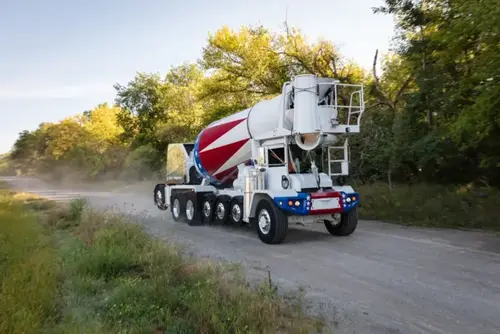
An Oshkosh S-Series front discharge mixer truck with a patriotic drum drives along a gravel road.
“Customers told us where the existing configuration was creating complexity. The feedback gave us an opportunity to look at the complete axle system and find an enhanced way to meet Federal Bridge Law requirements.”
— David Anderson, Sr. Product Manager, Oshkosh S-Series

Key Features of the High Lift Tag Axle

The new Oshkosh S-Series front discharge mixer axle configurations combine a high-lift rear tag axle with a revised auxiliary axle layout and intuitive axle controls. By looking at the entire axle system rather than simply modifying the existing rear axle, Oshkosh engineers developed configurations designed to meet bridge-law requirements while addressing the daily operating challenges customers identified.
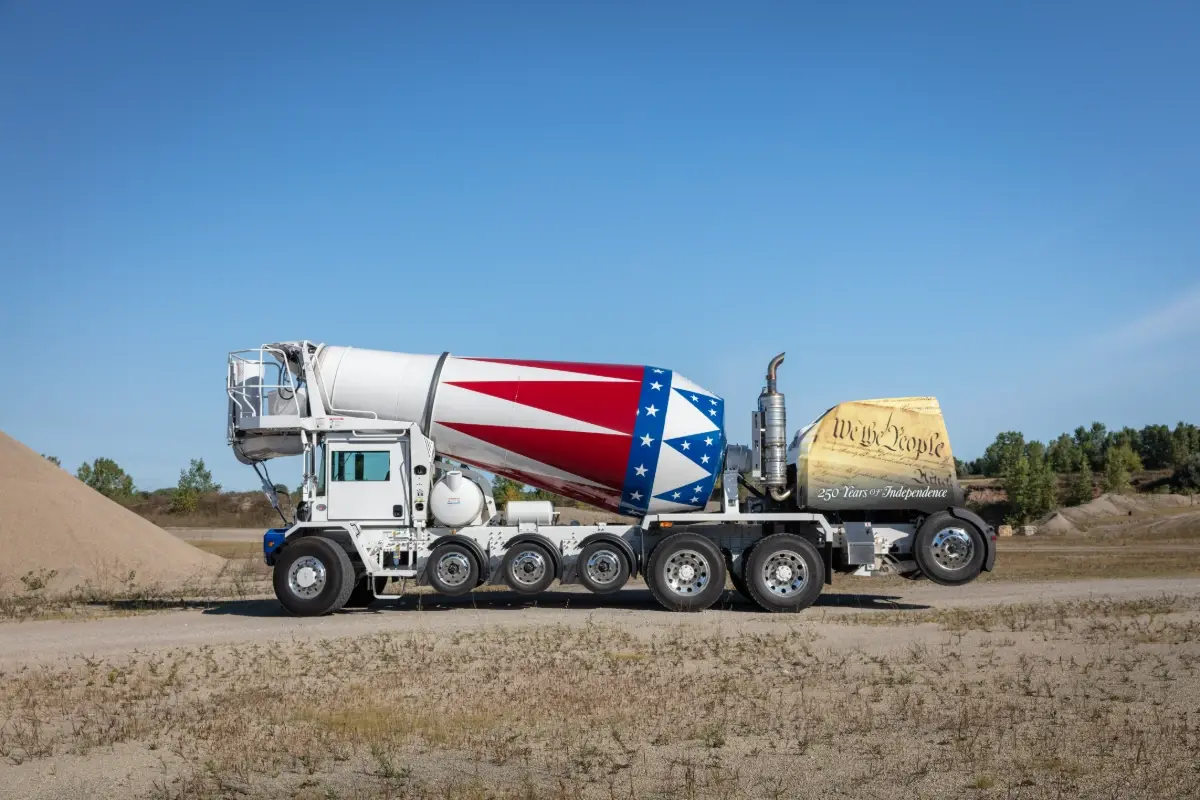
Oshkosh S-Series front discharge concrete mixer truck with a patriotic drum and high-lift tag axle configuration.

High-Lift Tag Axle: Positions the rear auxiliary axle beneath the frame rails, reducing the distance the axle extends behind the vehicle.

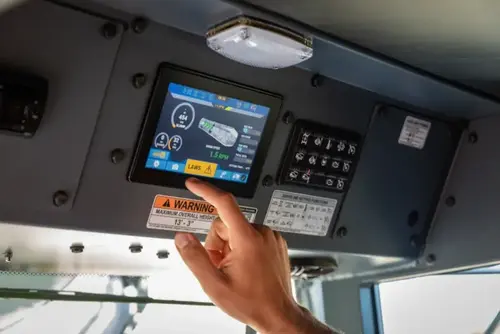
Light Axle Warning System: Pressure monitoring helps identify conditions where the load on the tandem axle may be insufficient and provides an in-cab warning to the operator.

Reconfigured Auxiliary Axles: Uses a revised axle layout to distribute weight across while supporting applicable Federal Bridge law requirements.

Independently Controlled Auxiliary Axles: Allows auxiliary axles to be raised and lowered independently as payload changes instead of requiring the operator to continually adjust pusher axle pressure.

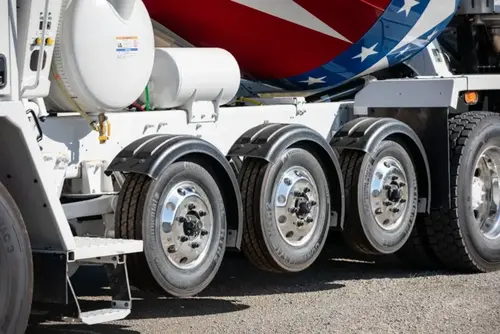
Optimized Auxiliary Axle Sizing: Utilizes axles optimally sized for the new weight distribution that include small wheels, tires and fenders for vehicle weight savings.

Easy Rear Service Access: The high-lift tag axle provides clear access to the rear hatch area used for DEF filling, electrical troubleshooting, battery access and other service needs.

Simple Mid-Chassis Access: Revised axle and fender placement provides additional access around the center portion of the vehicle for inspection and maintenance.

Benefits of the Oshkosh S-Series High Lift Tag Axle Configurations

Designed around feedback from concrete producers and drivers, the new configurations address several challenges associated with operating multi-axle mixer trucks.

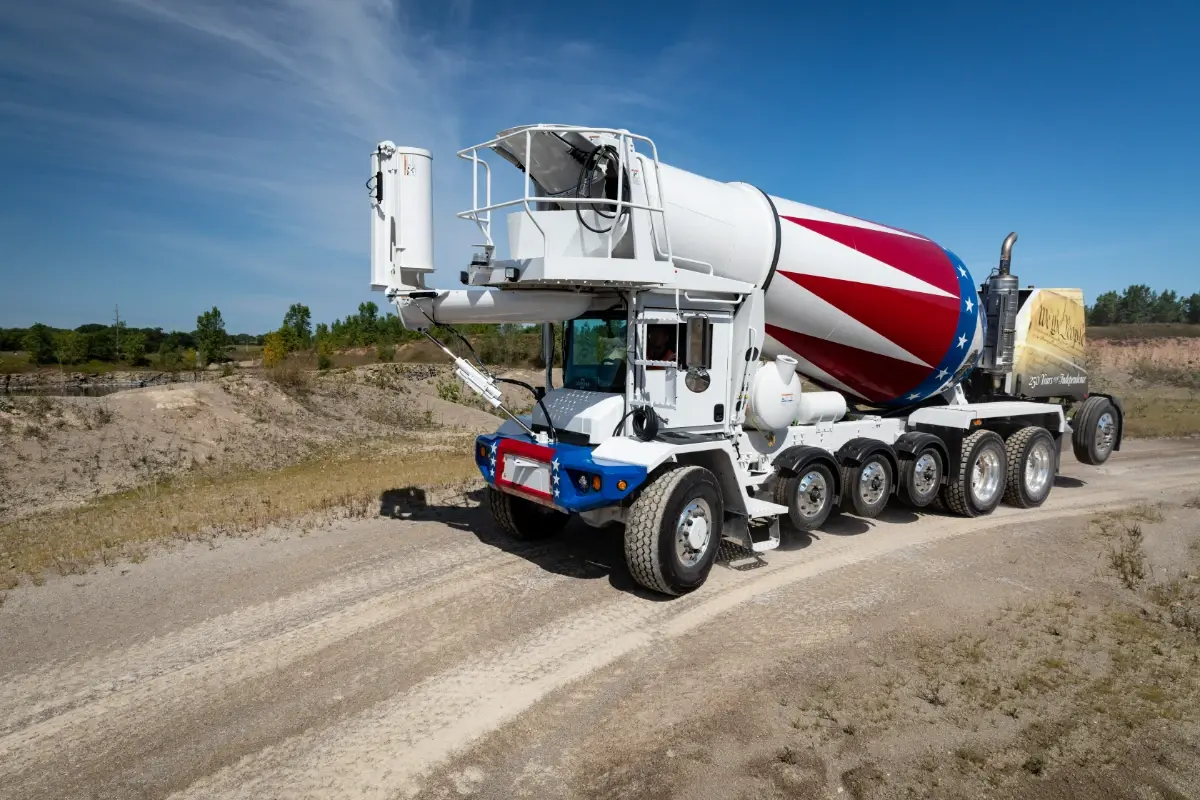
Oshkosh S-Series front-discharge concrete mixer truck in a patriotic red, white, and blue design.

Maneuverability: Locating the rear tag axle under the frame rails reduces the length of the truck, helping drivers navigate construction sites, turns and backing situations with confidence.

Axle Management: Independently controlled auxiliary axles help simplify how drivers respond to changing payload conditions.

Supports Payload Requirements: The configurations were engineered around the payload needs customers routinely use while continuing to support required axle-weight distribution.

Easy Operation When Empty: When operating unloaded, auxiliary axles can be raised so the mixer can travel on few axles, helping make the truck easy to drive.

Easy Maintenance Access: Excellent access around the rear hatch and center of the chassis can help technicians reach frequently serviced components easily.

“Customer feedback regarding maneuverability, backing incidents, maintenance and driver experience directly influenced the development of the configuration.”
— David Anderson, Sr. Product Manager, Oshkosh S-Series

How Do the High-Lift Tag Axle Configurations Work?

The new axle configurations change how weight is distributed and do not rely on a load-span axle extending farther behind the truck.

  • The high-lift tag axle sits beneath the rear frame area while additional auxiliary axles are positioned forward of the tandem axle. This revised layout distributes the load across the vehicle while using lighter-capacity auxiliary axles where appropriate.

  • Because each auxiliary axle can operate independently, drivers can also respond to different load sizes by raising or lowering individual axles rather than continually adjusting axle pressure.

  • With a full load, the required auxiliary axles should be down to support weight distribution. 

  • When the mixer is empty, all auxiliary axles can be raised and the truck can operate on its primary three axles promoting a simple experience for operators.

Supporting Federal Bridge Law Requirements

Federal Bridge Law and applicable state weight requirements influence how heavy vehicles distribute weight across their axles.

For concrete professionals operating in states where these requirements make additional axle spacing necessary, the Oshkosh S-Series front discharge mixer High-Lift Tag configurations provide axle arrangements designed around the required operating conditions.

The allowable payload and axle requirements vary by state and truck configuration. As such, customers should work with their Oshkosh S-Series sales leader to determine the appropriate axle configuration for their needs.

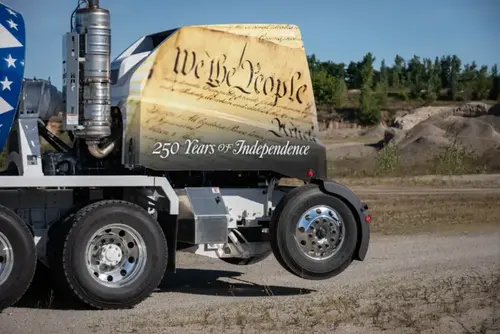
Oshkosh S-Series concrete mixer truck with a high-lift tag axle and patriotic We the People graphic wrap.

Concrete Mixer Payload and Weight Distribution

Payload remains one of the most important considerations in concrete mixer configuration. Because concrete is heavy, axle placement and weight distribution help determine how the truck can carry its load while meeting applicable federal and state requirements.

For most customers, 10 yards represents the practical standard payload for operations. The Oshkosh® S-Series™ High-Lift Tag Axle configurations were developed around these real-world payload requirements, using a revised auxiliary axle layout to evenly distribute weight across the vehicle in a way that is still Federal Bridge compliant. 

Close-up of reconfigured auxiliary axles with black fenders on an Oshkosh S-Series front discharge mixer truck.

Light Axle Warning System

The Oshkosh Light Axle Warning System adds another level of visibility to auxiliary axle management.

Air pressure controls the downforce applied through the auxiliary axles and, in turn, how much weight those axles carry. Applying the correct auxiliary-axle downforce can help reduce the weight carried by the rear tandem.

Pressure transducers monitor the system and provide axle-pressure information to the truck. If the system identifies a condition where tandem-axle pressure is insufficient, the driver receives a warning through the cab display.

The Light Axle Warning System supports operator awareness while helping simplify management of the truck's axle system.

A driver presses the Light Axle Warning System icon on the Oshkosh S-Series in-cab digital touchscreen display.

Frequently Asked Questions

+-

Why do concrete mixer trucks need additional axles?

Concrete mixer trucks carry heavy payloads and additional axles can be required to distribute the weight appropriately. In certain states and configurations, additional axle spacing helps the vehicle meet applicable Federal Bridge law and axle-weight requirements.

+-

How does a high-lift tag axle differ from a load-span tag axle?

A load-span axle extends farther behind the vehicle to create the spacing needed for weight distribution. The Oshkosh S-Series front discharge mixer High-Lift Tag Axle sits close to and underneath the frame rails while working with a revised auxiliary axle configuration to distribute weight.

+-

Does the new axle configuration negatively affect concrete payload?

No. The configuration was designed around the practical payload requirements concrete producers use most often while meeting applicable weight-distribution requirements. 

Payload capacity varies by state and vehicle configuration, so customers should confirm specific payload capability with the Oshkosh S-Series team.

+-

How are the auxiliary axles controlled as payload changes?

Individual auxiliary axles can be raised or lowered independently. With various load sizes and as vehicle weight decreases, drivers can raise individual axles rather than continually adjusting axle pressure.

+-

Do the new axle configurations support easy maintenance access?

Yes. The high-lift tag axle configurations provide simple access to the vehicles rear hatch area, including the DEF fill, battery, electrical components and other systems used during service and troubleshooting.

+-

What is the Oshkosh Light Axle Warning System?

The Light Axle Warning System monitors axle-pressure information and alerts the operator if the system identifies a condition where weight loading on the tandem axle may be insufficient.

+-

Who should consider the high-lift tag axle configurations?

The configurations are primarily intended for concrete producers operating Oshkosh S-Series mixers in states where Federal Bridge law and axle-weight requirements make additional axle spacing and weight distribution necessary.

Innovation Through Simplification

The Oshkosh® S-Series™ High-Lift Tag Axle configurations were developed by listening to the unique needs of our customers.

By rethinking the axle system, Oshkosh created configurations designed to move the rear tag axle under the frame rails, which shortens the overall truck length compared to a load span tag axle configuration. keep the rear tag axle close to the truck, This helps simplify axle management as payload changes and provide easy access to key service areas. The result supports the weight-distribution and payload requirements of bridge-law operations while helping make the mixer more intuitive to operate and maneuver on active jobsites.

Need a Federal Bridge Law compliant concrete mixer configuration built around the demands of your operation?  Talk with an Oshkosh S-Series representative about your state's requirements, payload needs and available axle configurations.